
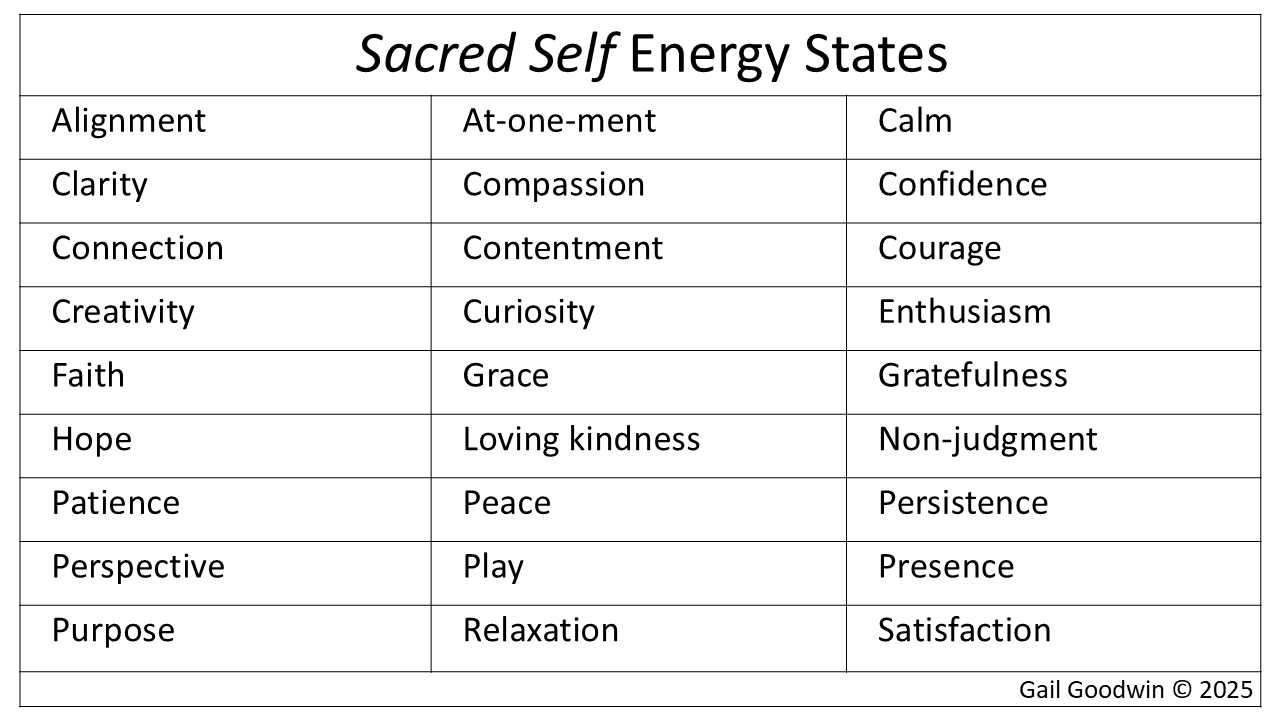
Collaborating with your personal archetypes can bridge the gap between having an insight and sparking archetypal transformation. It begins when you learn to inhabit the energy of your true, authentic Self, which is sacred.

Your Sacred Self is the label I use to describe and capture the part of you that is undamaged and cannot be harmed. You might recognise it as your Soul, your Flow State, your Higher Self, Real Self, Divine Self, Authentic Self, God, or Spiritual Self. You get the idea. If you prefer, you can also think of it as a perspective. However you choose to acknowledge it, your Sacred Self collaborates with your archetypes by serving as the conscious, leading centre of your Soul that dialogues with your archetypes, recognises insights, assigns archetypal roles, and authorises their expression. Your Sacred Self doesn’t perform the transformation itself; it supervises, consults, monitors and directs the archetypal forces that make transformation possible.
“You know you’ve transformed an archetype when the archetypal pattern shifts from being a largely unconscious, reactive expression to a conscious, responsive expression. From a Jungian perspective and in somatic terms, transformation means an archetype’s energy moves from unconscious, automatic reactivity into conscious, integrated responsiveness, so you can notice the pattern, choose a different response, and use its strengths intentionally. This is a process of making the unconscious conscious through integration and practice. It’s not a one-time switch.” Gail Goodwin
Collaborating with your archetypes works well when you’re inhabiting the energy of your Sacred Self. From there, you can consciously recognise and claim the insight. Your insight sparks transformation once it’s claimed by your Sacred Self. Without claiming it, your insight remains an observation of your mind, or a nagging feeling or sensation. To claim it, your Sacred Self might acknowledge something along the lines of: “This truth belongs to me. I accept it as guidance.” This act of recognition converts passive awareness into inner authority. You own the insight as wisdom rather than hardly noticing it.
Your Sacred Self discerns which archetype needs to act. Each archetype has a specific, sacred function, a role to play. When you’re in the energy of your Sacred Self you can determine which archetype is needed to implement the insight. For example: Your Sacred Self receives an insight that reveals the need for stronger personal boundaries. Your Sacred Self calls forth the Victim, Warrior, and Caregiver archetypes.
The Victim archetype indicates the need to set a new boundary. The Warrior enforces it and the Caregiver sustains compassion during the transition. Your Sacred Self has orchestrated the participation of your archetypes so that transformation is effectively coordinated.
Your Sacred Self authorises constructive and empowering archetypal expressions. Archetypes can be expressed as empowering or disempowering, mature or immature, strengths or weaknesses, gift or traps, pitfalls or benefits, helpful or unhelpful. Your Sacred Self governs these polarities by recognising the archetypal patterns that no longer serve you. It authorises the constructive archetypal expressions to bring balance to overactive, under active, and inactive archetypes.
To continue with my example, without leadership from your Sacred Self, the Warrior is more inclined to become aggressive, the Caregiver may become self-sacrificing, which is in turn can push the Victim archetype into activating the Bully archetype, or the Coward archetype. However, with your Sacred Self in charge, each archetype has a safe space to express its highest potential instead. Your Sacred Self energy ensures that your archetypes serve wisdom instead of unfounded fears.
Your Sacred Self stabilises archetypal transformation over time. While an archetypal activation can be temporary, your Sacred Self provides continuity. Your Sacred Self is at the core of your soul space. From within this sanctuary, your Sacred Self holds the long-term view of your life. It maintains this perspective even when discomfort, fear, or resistance arise. Inhabiting your Sacred Self energy allows you to be mindful of your archetypal traps, and to supervise the archetypes in their constructive roles, as they function from their sacred position, expressing their highest potential. This is so that transforming your archetypes becomes sustained rather than random or episodic.
Your Sacred Self integrates insights as wisdom stored in your soul. (This lived experience becomes the inner reservoir your intuition draws from.) Your Sacred Self integrates the new archetypal expression into your sense of being so that what was once an effort becomes second nature to you. You are no longer trying to act differently. Being conscious of the archetype’s traps and pitfalls allows you to express the true nature of the archetype. By aligning your behaviour with the highest archetypal function, your archetypal transformation becomes embodiment.
An insight reveals a truth to acknowledge and often act upon. Your archetypes provide you with a role to play, a sacred, functional capacity. Inhabiting your Sacred Self provides you with conscious authority. Your true, authentic, Sacred Self can recognise the truth. It can assign archetypal responsibility, heal the disempowered archetypal patterns, and authorise their constructive expressions. By collaborating with your archetypes, your insight becomes an integrated, lived experience.


You must be logged in to post a comment.